
ACHD June 23, 2026 Cemetery Tour
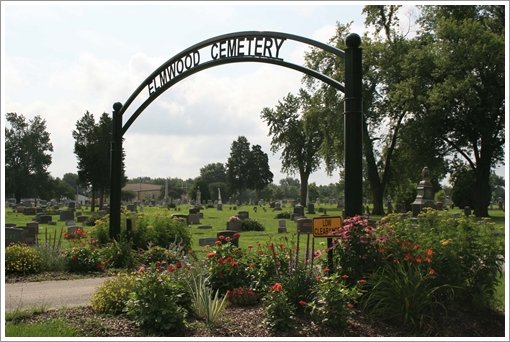
Enjoy the notes from last nights history walk at Elmwood Cemetery
Stop #1: Aylett Hawes Buckner – born in Fredericksburg, VA in 1816. Attended Georgetown then UVA. Moved to MO in 1837, Pike Co deputy, became a lawyer in BG. Editor of Salt River Journal, Clerk of Pike Co Court in 1841, attorney for the Bank of the State of MO 1852, Commissioner of Public Works 1854-55, elected Judge of 3rd Judicial Circuit in 1857. FAG bio does not say what he did or where he was during the Civil War, but in 1863 he named his newborn son Stonewall Jackson Buckner. Served as Congressman from 1873-85, Democrat. Mother’s family was the powerful, wealthy slaveholding family Hawes of Virginia, Kentucky, Missouri. First cousin Richard Hawes was the second Confederate Governor of Kentucky 1862-65. Buckner was a staunch Jacksonian Dem, opposed to political rights for Blacks. National events of his Congressional tenure: Panic of 1873, US Centennial, Little Bighorn, end of Reconstruction, disputed election of 1876, assassination of President Garfield, election of Grover Cleveland, breaking string of 6 consecutive GOP victories.
Stop #2: Col Bazel Lazear – born in W Va, native of Ashley in Pike Co, Mo. Joined the Union Mo State Militia in 1862, rose to Col. Became known as an effective counter-guerilla operator. Almost caught up with Quantrill’s men on their Lawrence Raid in Aug 1863. Advocate of “hard war”, he backed harsh measures & little quarter for Rebels. “I am sorry that they are prisoners on my hands, as they should have been shot on the spot,” he once said about captured Confederates. Another time, he praised a corporal who caught a rebel “and beat his brains out with a pistol.” Note son’s name: Nathaniel Lyon Lazear. Talk about how naming sons after CW figures became popular.
Stop #3: Asa Lee Hall – no marker, Mexico’s champion long-distance roller skater. Skated from Mexico to Brooklyn, Jacksonville, NO, and LA over the years. Sold souvenir photos, on one trip he wore out 28 skate wheels.
Stop #4: Cenotaph: Simpson Brothers. Define cenotaph. Lewis – 6th Division, MSG, killed in action at Carthage, MO July 5, 1861. About two weeks before Bull Run, about 5 weeks before Wilson’s Creek. Only time a sitting US State Governor (Claiborne Jackson) led troops in the field against the Union to which his State belonged. Col Franz Sigel’s Union force was almost exclusively German-Americans from STL.
George Simpson – was in 6th Division, MSG, also. Died of wounds March 2, 1865, sustained at the Battle of Franklin, Tenn just south of Nashville Nov 30, 1864. Pvt, Co D, 3rd MO Inf CSA. The Rebel charge at Franklin was larger & bloodier than Pickett’s Charge at Gettysburg. 6 CSA Generals were killed. 6252 CSA casualties out of less than 30K engaged. George was captured in a Franklin hospital Dec 18, transferred to Nashville Prison hospital, died there.
Was another Simpson brother – Delaware Simpson, pvt, Co D, 2nd Mo Inf, CSA. Also killed at Franklin, carrying the regimental flag, buried at McGavock Confederate Cemetery on the battlefield at Franklin among the Unknowns.
Nearby – George W. Bailey, Co B, 32nd Illinois Infantry. Fought at Shiloh, Champion Hill, Big Black River, Vicksburg, Kennesaw Mtn, Atlanta, March to the Sea, Bentonville NC. His unit fought against the Simpsons at Champion Hill thru Atlanta. Now buried near each other.
Stop #5: Rhodes Clay – 1875-1902, buried after reinterment at Paris Cemetery, Bourbon County, KY. Part of the prominent Clay family of Kentucky, son of Col. Green Clay, an aide during the Civil War to Union General George Thomas (the Rock of Chickamauga). Rhodes Clay was born on a Miss. Cotton plantation in 1875, moved to Mexico in 1881. 1891 grad of MMA, then attended Princeton, UVA, and Wash U in STL. He had served one term as our Dem State Rep. Shot 3 times & killed by Clarence Barnes in front of the PO on July 10, 1902. He had been arrested for a fight a few weeks before with Clarence & Latney Barnes over publication of an article written by Clarence Barnes. Clay was badly hit in the chest from the left side & died an hour later. Barnes was wounded in the right arm. Both men were well known & connected in the community. It was 15 months before a trial was finally held in Lincoln Co on a change of venue. Barnes was acquitted. He is buried in Block O, Lot 92, here at Elmwood.
Stop #6: John Edward Hutton – born in Polk Co Tenn 1828. US Congressman, succeeded Aylett Buckner in 1885, Democrat. Was a Dr in Warrenton, Colonel of the 59th EMM during the Civil War. Talk about the EMM. After the war, studied law, practiced in Mexico.
Stop #7: Tom Bass - Bass was born into slavery on January 5, 1859, on the Hayden plantation in Boone County, Missouri. His mother, Cornelia Gray, was a slave, and his father, William Bass, was the son of the plantation owner, Eli Bass. At age 20 he moved to Mexico, Missouri, where it is thought he learned the basics of the horse business from a horse buyer named Joseph A. Potts. Some time thereafter, he began a horse training operation.
In 1882, Bass married a schoolteacher, Angie Jewell. In 1897 the couple had a son, Inman. Bass quickly developed a reputation for gentle training methods and drew a clientele from a wide area. He was reputed to have said, "Horses are like humans." Bass trained the influential five-gaited Saddlebred stallion Rex McDonald. He trained horses for notable people including Anheuser-Busch executives Adolphus and August Busch, Buffalo Bill Cody, Will Rogers, and President Theodore Roosevelt. He also started the Tom Bass Riding Club. Celebrity guests to his farm included William Jennings Bryan, President William McKinley, and circus magnate P.T. Barnum.
In 1892, Bass and his wife moved to Kansas City, Missouri to open a livery stable and eventually helped start the American Royal Horse Show, one of the three jewels of the Saddlebred Triple Crown. He was the first African-American to exhibit a horse at the American Royal. In 1893, Bass showed horses at the World's Columbian Exposition in Chicago and won respect for his riding ability, besides winning the World Championship on the Saddlebred mare Miss Rex. Bass later moved back to Mexico, Missouri, and continued training horses. In 1917, it was estimated that over one million people had seen him perform with his horses. He was credited with making Mexico, Missouri the "Saddle Horse Capital of the World."
Besides Rex McDonald and other Saddlebreds, Bass trained the notable high school horse Belle Beach, who could bow, curtsy and dance. He invented a curb bit called the Tom Bass bit, which was designed to give the rider control without causing pain to the horse, but never patented it. The Bass bit is still in use. For his contributions to the state of Missouri, Bass was posthumously inducted into the Hall of Famous Missourians in 1999, becoming the twentieth person so honored. Bass also has exhibits in the American Saddlebred Museum in Mexico, and the American Royal Museum in Kansas City.
Death and legacy
Bass died of a heart attack on November 20, 1934, at the age of 75. His friends believed that grief from the recent death of Belle Beach, one of his best horses, contributed to his death. Upon Bass's death, Will Rogers devoted an entire newspaper column to him, saying in part, "Tom Bass...aged 75, died today. Don't mean much to you, does it? You have all seen society folk perform on a beautiful three- or five-gaited horse and said, 'My, what skill and patience they must have had to train that animal.' Well, all they did was ride him. All Tom Bass did was train him. He trained thousands of horses that others were applauded on."
Stop #8: Sergeant Gordon James Simpson - Sgt. Simpson Is Returned For Reburial
Mexicoan Who Died In Belgium Is En Route Here (Mexico Evening Ledger, 11/25/47)
The remains of the late Sergeant Gordon J. Simpson of Mexico have arrived at the port of New York, aboard the army transport Robert Burris, for delivery to the final destination here in the near future. When the remains are ready to be forwarded, Mr. and Mrs. George Simpson of 1105 E. Jackson st., Sgt. Simpson's parents, will be advised as to the scheduled time of arrival and the name of the military escort, according to word from the Kansas City Quartermaster Depot. Sergeant Simpson was killed in action in Belgium on January 31, 1945, while serving with Company I of the 38th Infantry Regiment of the Second (Indian-Head) Division. The elder son of Mr. and Mrs. Simpson, he was born in Mexico June 8, 1914. He attended the Mexico schools and graduated from Mexico high school in 1932, where he played both basketball and football. He was employed with the A. P. Green Fire Brick Co. here and later with an associated company at Cleveland, O., where he entered service in June 1942. He served overseas from September 1, 1944. Active as a Boy Scout in his youth, he was a member of the Presbyterian church, where a memorial service was held for him in April, 1945. He was survived by his parents, a younger brother, George Simpson, now with the A. P. Green Fire Brick Co. here and in the Navy during the war, and by his wife, a native of Cleveland.
Sgt Simpson’s WWII service: He would begin his combat service in Sept 1944 when the 2nd Div was fighting to clear the French port city of Brest. Hitler had ordered that German forces hold these port cities at all costs to try to slow the Allied advance toward Germany. Bitter fighting, then they rested for the second half of September. The 2nd would then be assigned to the Western Front along the German frontier in the Ardennes sector in Oct-Dec. On Dec 16, 1944 the Germans launched their Ardennes Offensive. While places like Bastogne or St Vith seem more notable, the 2nd defended the Twin Villages of Krinkelt & Rocherath from the onslaught of several crack SS Panzer divisions. They would hold the northern shoulder of what became known as the Battle of the Bulge. Around Jan 1, 1945, US troops would go on the offensive to flatten the Bulge. It was in this final phase of operations on Jan 31, 1945 that Sgt Simpson was killed in action.
At the end of WWII, the US military set up a program to repatriate & reinter the remains of personnel killed overseas. Families could choose whether to bring loved ones home, or for them to remain in several overseas cemeteries maintained by the American Battle Monuments Commission (like in Italy, Normandy, Belgium, and places in the Pacific). About 60% opted to bring their loved ones home. Army & Navy transports would carry their remains home between 1945 and 1951. One of the most massive such efforts ever undertaken in human history. Sgt Simpson is one of these.
Stop #9: Howard Rushmore – parents Clifford & Rosa Rushmore buried here. Quite the character – born in 1913 in Mitchell, SD. Parents struggled to farm in Wyoming, moved to Rosa’s (nee Palmer) hometown of Mexico in the mid-1920s. Clifford worked at a brick plant. Howard attended MHS, wrote articles for the HS paper Yellow Yap and the Ledger. Expelled as a junior for exposes in the Ledger about MHS admin & teachers. Then went to St Brendan’s, where he dropped out. Became a reporter for the Mexico Intelligencer, then became a Communist. Wrote for CPUSA mags, organized farmers in the Dakotas & IA. Went to NYC in 1935, writing for the Young Worker then the Daily Worker. Married fellow Communist writer Ruth Garvin in 1936. Became the Daily Worker’s film critic. Was not sufficiently negative about Gone With the Wind, was fired, front page news in NYC.
Flipped to avowed anti-communist, wrote many such articles, mentored by Walter Winchell. Separated from Ruth in 1945, got a Mexican divorce, married Frances McCoy – beauty queen, model, fashion editor. 1947 – key witness for HUAC against communists in Hollywood. Testified against Edward G. Robinson, Charlie Chaplin, etc. Worked for Joe McCarthy. Then became chief editor for Confidential, a NY based scandal magazine/tabloid. Stories of drug abuse, communist sympathies, homosexuality, sexual deviancy, etc. Blackmail, lawsuits, etc. – including one by Robert Mitchum. 1955 – appeared on The Tom Duggan Show in Chicago, appealing to viewers to help him uncover communists. He then disappeared, FBI launched nationwide manhunt, nation speculated he was kidnapped/murdered by communists. Later found hiding in a hotel in Butte, MT under an alias. FBI assoc director wrote “Rushmore must be a nut.” FBI Director wrote “I certainly agree.” He was J. Edgar Hoover.
1955 – Rushmore had become an alcoholic & amphetamine abuser. Wife Frances tried to commit suicide by jumping in the East River in NYC. Rushmore tried to get the Confidential to publish his article about Eleanor Roosevelt having an alleged affair with her black chauffer. Editor refused, and he quit. He then was the State of CA star witness in a suit against the Confidential. Ended in a mistrial in 1957. Rushmore thought himself a hero for the legal fight against the Confidential, but he became a pariah in the publishing world.
In December 1957, Rushmore chased his wife and teenaged step-daughter Lynn out of their Manhattan home with a shotgun. Two days before Christmas, Frances and her daughter left their home on the advice of her psychiatrist and stayed with Frances' eldest daughter, 20-year-old Jean Dobbins of Greenwich Village. Frances and Lynn later took over a friend's apartment. While Frances was under psychiatric care since the East River incident, Rushmore himself was now under psychiatric care.
On January 3, 1958, at 6:15 pm, a few days before Frances was scheduled to lead a group of editors on a trip to Brazil, the Rushmores met inside the lobby of their apartment building in a final attempt at reconciliation. Frances was due to have dinner at the Dobbins' at 8 pm. When an argument broke out between the couple, Frances left to hail a taxi. Taxi driver Edward Pearlman picked her up at Madison Avenue and 97th Street. Simultaneously, Rushmore entered the cab. As the two continued arguing, Pearlman ordered him out of the cab to which he replied, "I'm her husband, don't worry about it." "Where do you want to go?" Pearlman asked. "Take me to a police station," Frances said. As the cab raced to the 23rd Precinct at Third and 104th, Rushmore shot Frances in the right side of the head and neck, then put the pistol to his temple and shot himself. Both died. At the police station, an unregistered .32 caliber Colt revolver was found in Rushmore's hand and a seven-inch commando knife inside the waistband of his trousers.
Jean Dobbins speculated that her mother's refusal to take Rushmore to Brazil might have started the argument that ended in the shooting. Contrary to general expectations, Dobbins said her parents quarreled "over personal things, not Rushmore's controversial public life ... 'He was very possessive, very jealous, and wanted to go everywhere with her." Frances' father, Louis Everitt, the owner of a women's shoe store in Charlotte, NC, brought his daughter's body back to North Carolina.
A police search of the Rushmore apartment at 16 East 93rd Street revealed "a valuable gun collection ... along with an extensive collection of pornographic pictures." Dobbins was initially hesitant to claim her stepfather's body, though willing to do so if no blood-relation was willing; she did not want him to be buried in New York City's "potter's field." After Rushmore's body lay unclaimed at Bellevue for five days, his first wife Ruth, now a secretary, took custody. She held a private service at an undisclosed location, had the body cremated and sent the ashes back to be buried in Mexico, Missouri, "back to the 'dark and bloody ground.'" He has no marker here. It is speculated that the cremated remains were buried near his parents.
Stop #10: Peter McCullough, “Big Pete”, the Hanging Judge of Andersonville Prison – Member of the 8th Mo Inf, Union, the American Zouaves. Illinois men often made up large numbers of Mo Union regiments. He fought in several battles – Fort Donelson, Shiloh, Vicksburg. Was captured near Jackson, Miss after Vicksburg had fallen, in July 1863.
The records of the War of the Rebellion do not show that 6 Union soldiers, who were captured by the Confederates, were executed by their fellow prisoners in Andersonville Prison. Nevertheless, the 6 men were hanged. They were charged with being ringleaders in raids when they stole the scanty rations of other prisoners, their valuables, and as McCullough expressed it, "they took our lives when they took our grub."
"The gang was known as 'The Raiders'", McCullough told a reporter for the INTELLIGENCER, "and they had everything their own way nearly 3 months. We sent a petition to the prison authorities and requested relief. They granted our request and sent in a body of armed men, to whom we pointed out the raiders. In three hours, we had rounded up 200 men, who were identified with all kinds of villainy. They were marched outside the stockade that they might receive a fair trial. In fact, the raiders begged to be taken out for fear of violence as there were 35,000 prisoners in the stockade and everybody was against the raiders.
The stockade was in command of Capt. Henry Wirz, a Swiss, who was a physician. He afterward was executed by Union troops after a court martial. Gen. John A. Winder was his superior officer. Wirz informed our leading men he dared not proceed against the raiders, either by Court Martial or by civil law, but added he would permit us to organize a court, elect a judge, and impanel a jury to try our prisoners."
"I was elected judge of that court and the first day I tried fully 100 men for petty misdemeanors, the raiders soon saw we meant business and like men of today, they wanted immunity. In a short time, we had the ringleaders spotted and their trial was ordered."
"We permitted them to select their own attorneys and we had some good ones, too, in the 35,000 men in the stockade. The trial lasted 2 days and finally the 6 raiders were found guilty of murder, or of such crimes that made their presence among us intolerable. They were sentenced to death."
"Upon the pretense of going out for "firewood", 12 of our men were permitted to leave the prison although under watchful eyes of the sentries. They obtained the "firewood", which, in reality, was timber of building a scaffold. We informed Gen. Winder of our intentions to carry out the death sentence, and, like Pilate, he washed his hands of the affair and declined to take official notice of it."
"Father Hamilton, a priest who visited us often, was called to administer the last rites to the dying. The condemned men, even then, thought the whole thing a hoax concocted to frighten them and they refused to believe we were in earnest until they were brought within sight of the scaffold. When the 6 were led out, a big fellow named Curtis from New York looked up at the scaffold. 'Hang me? God, no,' he cried and broke away from the fellow who was holding him and ran down to a camp of prisoners, yelling at every jump for them to save him. Instead of saving him, they brought him back to us, and Curtis was marched up to the scaffold behind Father Hamilton and the rest of the condemned men.
"We had everything ready and the nooses were quickly adjusted. We had no trap doors, but a man was stationed behind each prisoner and at the word we gave each man a shove. The drop was 6 feet. The rope broke on one wretch as he dropped. He came begging for mercy. He was seized, the rope was re-adjusted, and he went with the others."
"The hanging broke up raiding. We formed a league amongst the better class of prisoners and were allowed to punish all offenders in the stockade." Mention the movie “Andersonville.”
After the War McCullough moved to Mexico. Died here in 1915 at age 76 of pneumonia.
Stop #11: Brothers David & Walker Lillard - In 2011, marking the 175th anniversary of both Mexico and Audrain County, I wrote some public service announcements for the occasion. They were read by Col. Charlie Stribling, and played on KXEO. The ones I wrote focused on our Civil War History. Here is one:
Did you know that nearly 200,000 African-Americans served in the Union Army in the Civil War? Most of these men were former slaves. Two such men who served, from right here in Mexico, were the Lillard brothers – David and Walker. They enlisted in the 4th Missouri Colored Infantry, later named the 68th US Colored Infantry, at Benton Barracks at St. Louis, and eventually served across the south, from Memphis to New Orleans, and from Pensacola to the Rio Grande.
The Lillards’ regiment fought off attacks by the famous Confederate General Nathan Bedford Forrest’s cavalry in Mississippi in 1864. Their most famous battle was the assault on Fort Blakely at Mobile Bay, Alabama, on April 9, 1865, which was defended by the Missouri Confederate Brigade. One of the Union commanders declared, “The Colored Troops in the assault & capture of this place on April 9th done a great thing for the cause & themselves & have again shown that the Negro will fight & fight bravely.” The 68th was sent to Texas in the summer of 1865 – the genesis of Juneteenth. The 68th was finally discharged in February, 1866.
African-Americans played a prominent and vital role in securing their own liberty and preserving our Union. And two who served bravely and admirably, David and Walker Lillard, were from right here in Mexico.
